Product Design · Full-Stack · UX
idealab
A privacy-first marketplace for ideas. Builders share what they're working on without giving it away. Matched collaborators have to agree to terms before the full concept is ever revealed.
Stack
Role
Solo: product design, UX, and full-stack build
Year
2026
Overview
Most idea-sharing is all-or-nothing: post publicly and hand your concept to anyone scrolling by, or keep it locked in a notes app and never find a collaborator at all. idealab sits in between. Builders capture an idea, choose to make it discoverable, and everyone else sees a title, category, and tags, never the full summary, until they request access and the owner approves. A timestamped agreement is recorded the moment access is granted, so both sides know exactly what was shared and when.
Problem
Early-stage builders want feedback, co-founders, or beta users before their idea is defensible, but the platforms built for that (Twitter, Discord, cold outreach) offer no middle ground between silence and full exposure. idealab's core design problem was building trust into an interface: how do you make "I want to see more" feel low-stakes for the requester and safe for the owner, without either side needing a lawyer.
Designing the capture flow
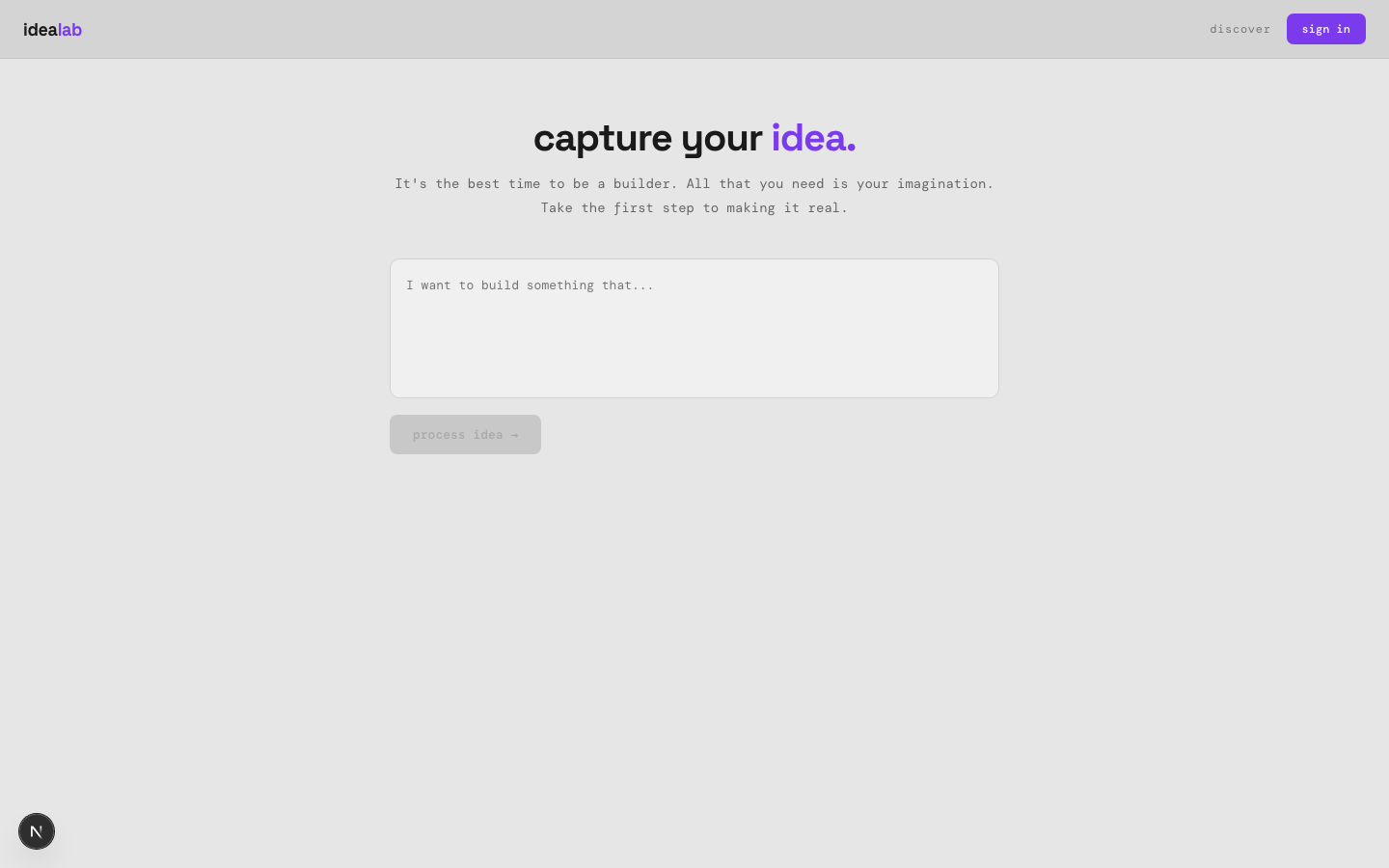
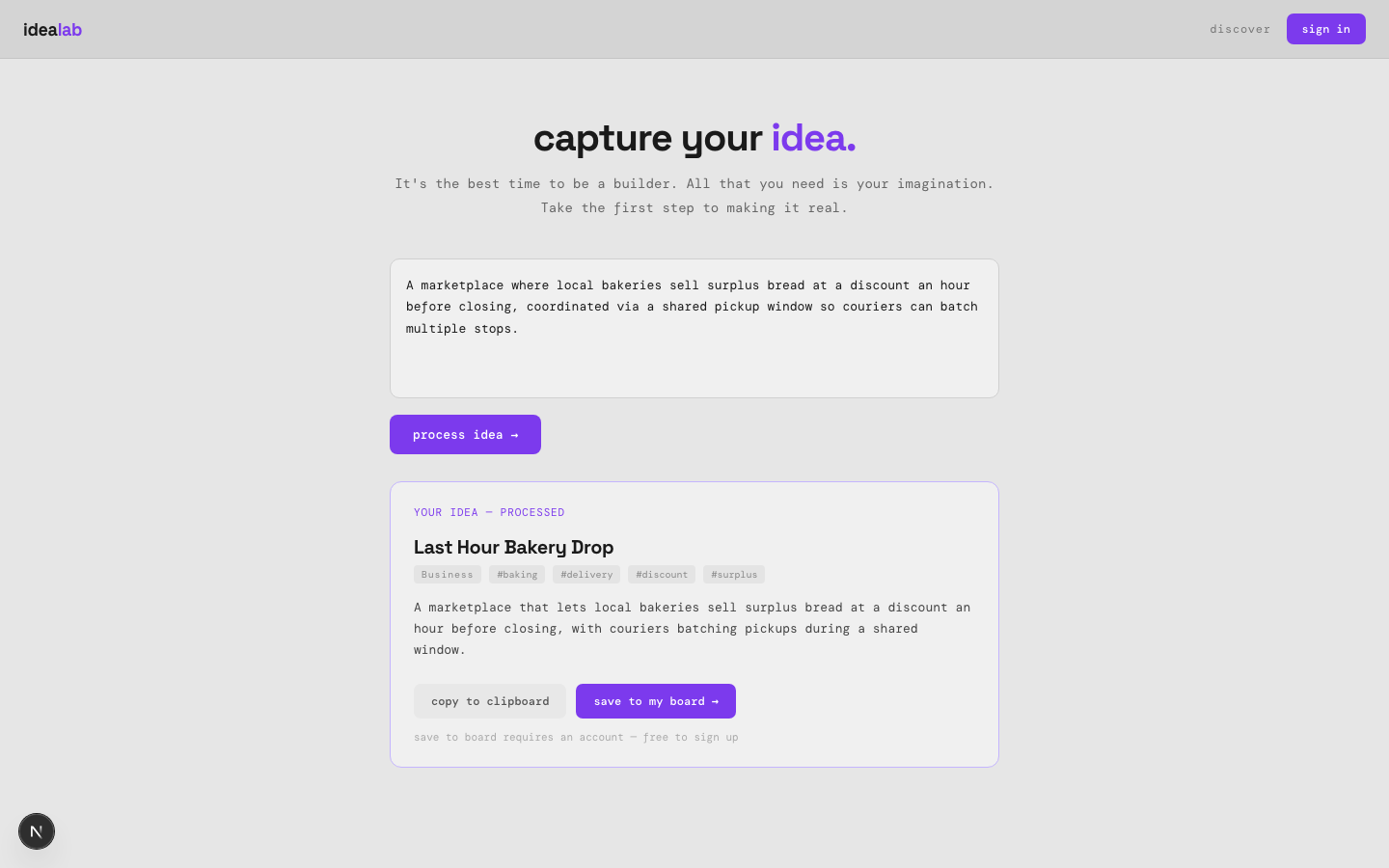
The entry point had to feel closer to a notes app than a form. A single open textarea, no required fields, no account wall. The friction of signing up only shows up once someone actually wants to save or publish something. Behind the scenes, the raw text is structured into a title, category, and tags automatically, turning an unstructured brain-dump into something that reads like a real listing.
Tiered visibility by design
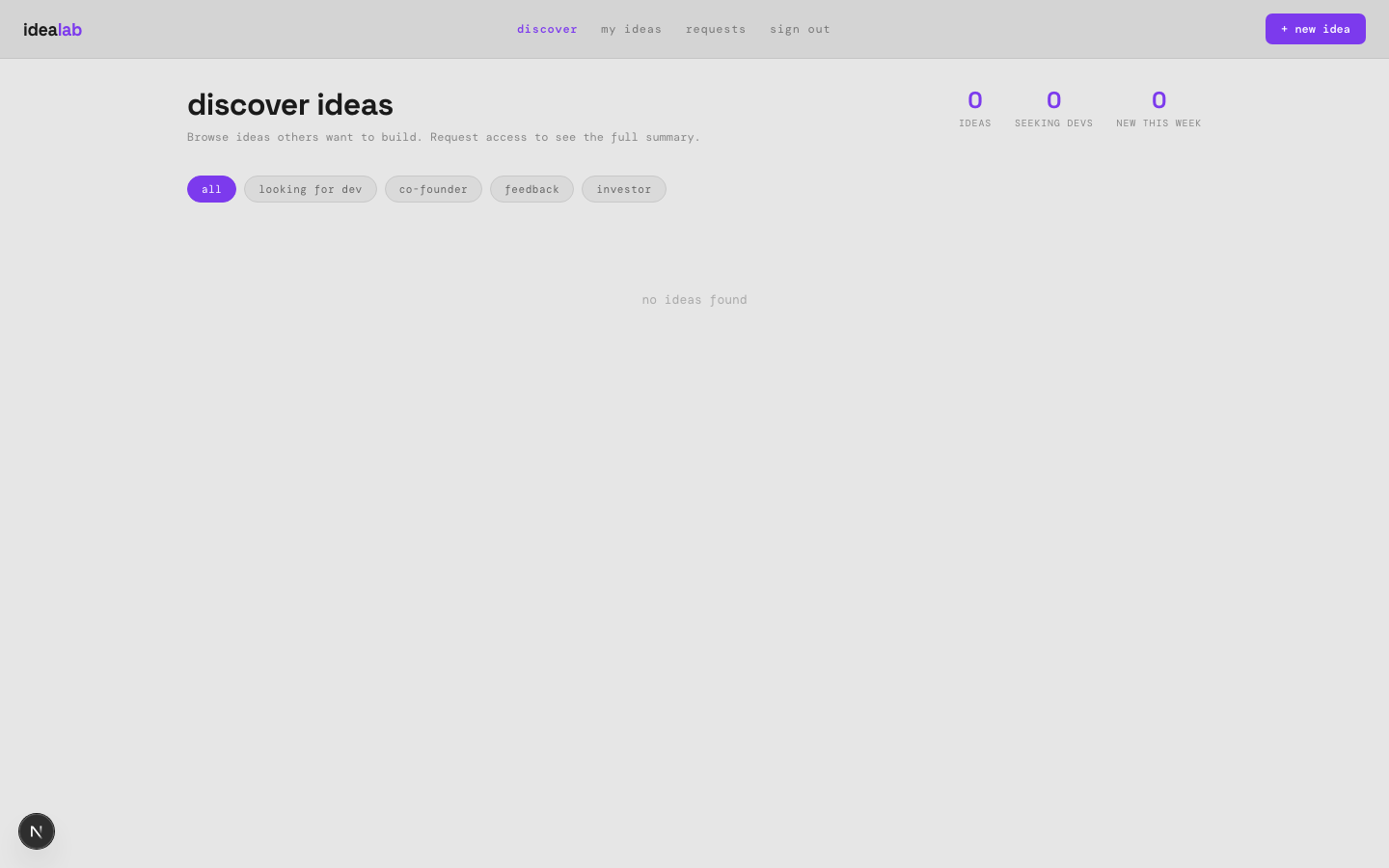
The discover board is the clearest expression of the product's core tension: show enough to earn interest, withhold enough to protect the idea. Cards surface title, category, and tags to everyone; the full summary stays hidden until an access request is approved.
Access & agreements
Requesting access, approving a request, and recording the resulting agreement all needed to feel like a lightweight handshake rather than a legal process, a deliberate design choice to keep the "NDA-lite" framing honest. Auth is Supabase-backed and only gates the actions that need it: browsing stays public, saving and requesting require an account.
A note on scope
This case study covers the product and interface decisions. The matching, ranking, and access-control logic underneath stays unpublished by design, fitting for a project about not giving away the whole idea up front.